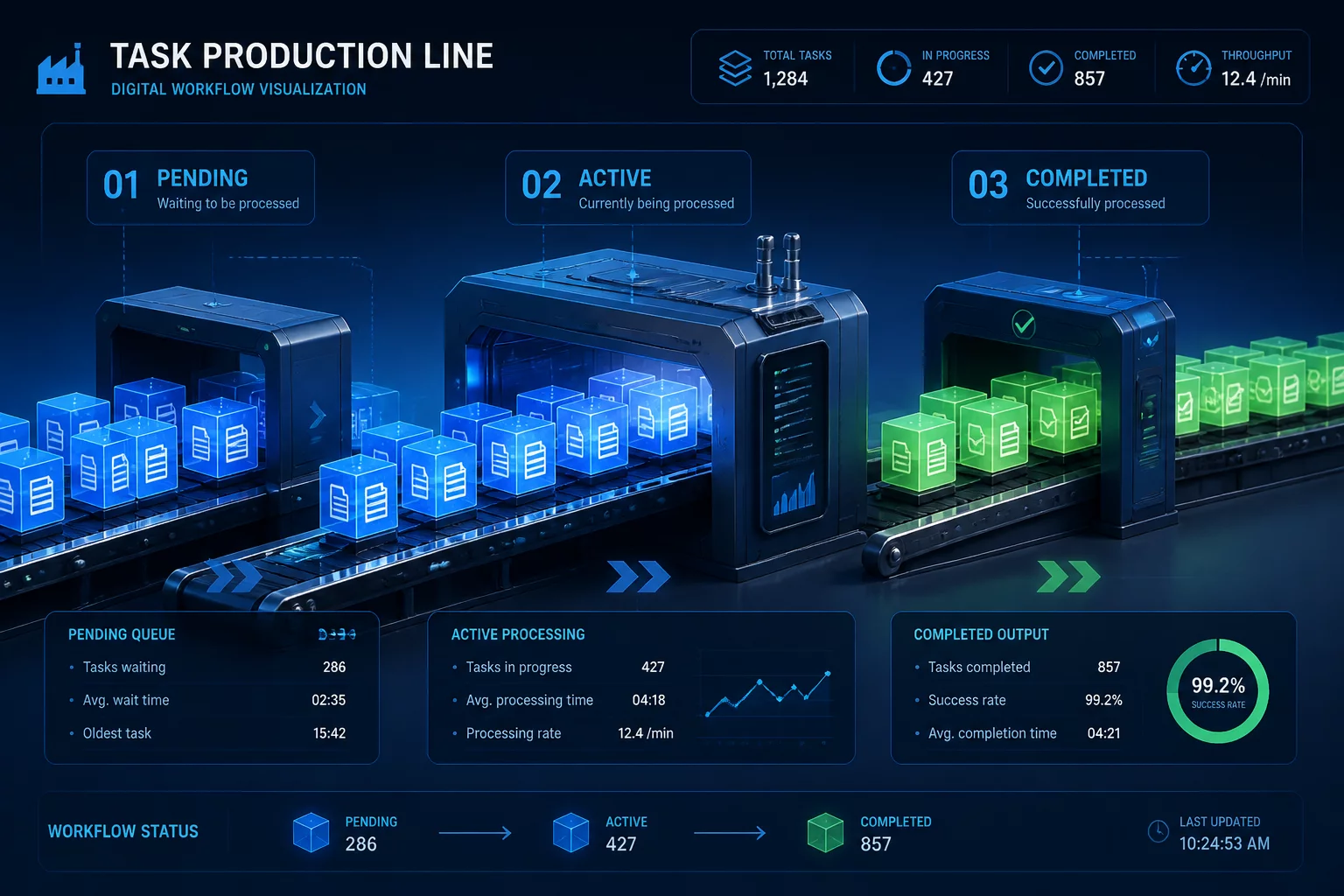
A resilient database-backed job queue schema provides the architectural foundation for executing background tasks reliably without losing state. Instead of relying on volatile in-memory queues, engineering teams utilize persistent relational tables to track task status, manage execution retries, and ensure high availability across multiple worker nodes. This approach guarantees that even during a system crash, no critical background tasks are lost or silently abandoned.
Core Database Schema Structure
Designing a reliable queue table requires fields that handle state transitions, lock acquisition, and scheduling times. A typical schema contains a unique job identifier, a payload field containing parameters, an execution status, and timestamps indicating when the task is scheduled to run. Furthermore, tracking the worker identifier currently processing the job and the execution attempt count prevents duplicate processing and helps manage automatic retry routines.
Locking and Worker Concurrency
Preventing race conditions where multiple workers grab the same job remains one of the primary hurdles of database-based queues. High-performance implementations utilize techniques like Row Locking with skip-locked queries to let workers query and claim tasks concurrently. For example, using SELECT FOR UPDATE SKIP LOCKED in modern databases retrieves the next pending job instantly without blocking other active workers. This minimizes queue latency and scales efficiently as worker pools expand.
Handling Failures and Retries
Background tasks frequently fail due to external API timeouts, database deadlocks, or network disruptions. The job queue schema must support exponential backoff strategies by updating the scheduled time and increasing the attempt counter. When a job exceeds its maximum retry threshold, the worker moves it to a failed state or transfers the record to a dedicated dead-letter table. This isolation permits manual inspection without slowing down the active queue pipeline.