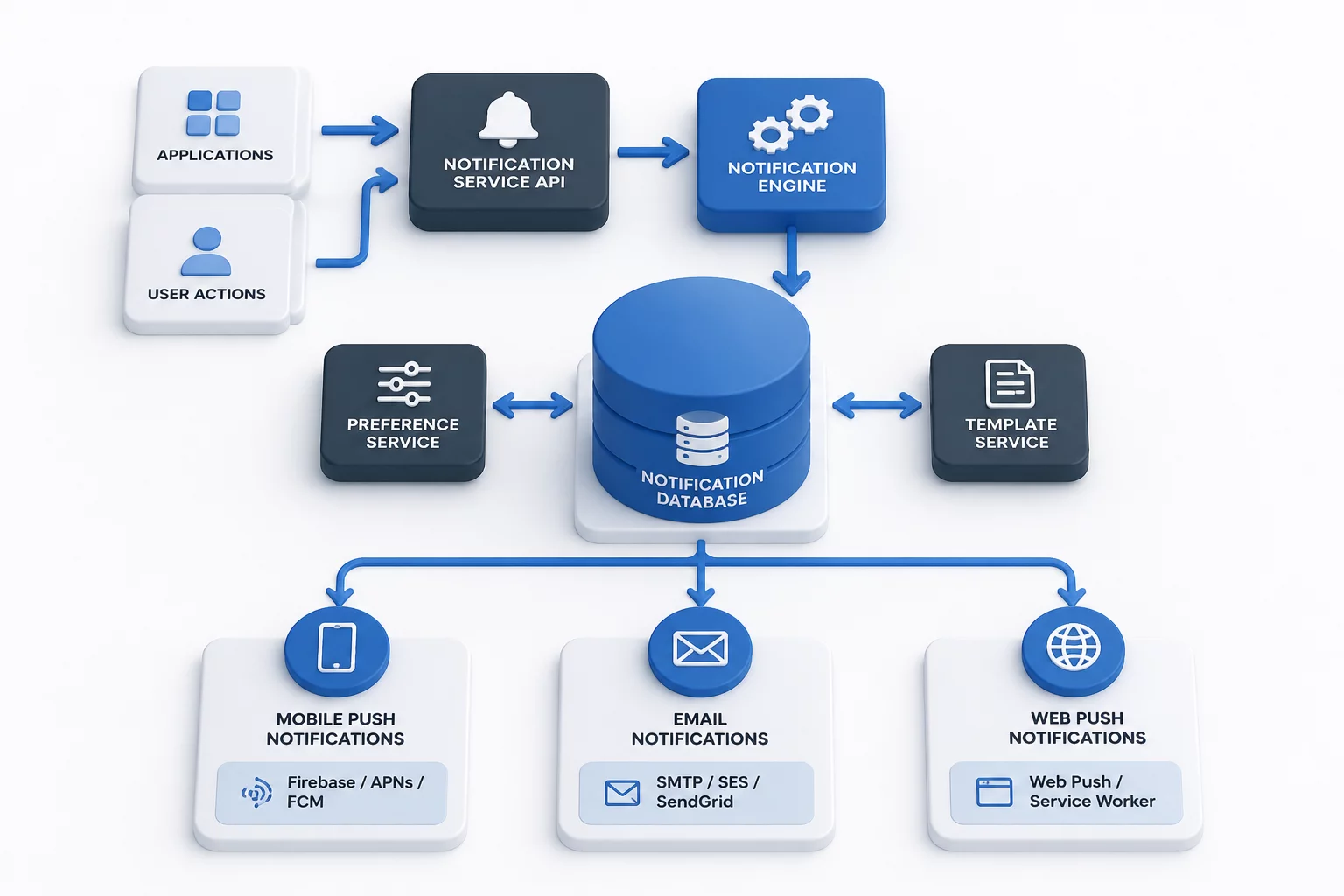
A reliable notification delivery schema forms the foundation of modern user engagement systems. This pattern isolates database transactions from slow external API calls, ensuring high system availability. It records every message intent, destination, and dispatch attempt inside structural database tables.
Core Architecture and Table Structure
Designing this system requires separation of user preferences, message templates, and the actual delivery queue. Write the system components into three distinct tables: notification templates, the active queue, and the transaction logs.
1. The Notification Templates Table
This table stores the standardized text layout and variables for different channels. Keep localized versions in separate rows to allow seamless multi-language delivery.
2. The Delivery Queue Table
The delivery queue handles active payloads that are waiting for dispatch. Mark each record with status indicators: pending, processing, sent, or failed. Set indexes on both the status and scheduled time columns to ensure fast lookups by background workers.
3. The Delivery Log Table
Archiving historical runs prevents the queue table from growing excessively. Move processed records to this history table periodically. Include provider response codes and error details to simplify troubleshooting of failed SMS or email requests.
Handling Failures and Retries
Implement exponential backoff strategies inside the worker processes. Track retry counts in the queue table. Stop attempts after a fixed threshold, typically five retries, and flag the notification as permanently failed. This protects system resources from being wasted on invalid contact endpoints.
Security and User Privacy
Protecting user data is critical. Sensitive alert content must be encrypted at rest. Set up automatic deletion scripts to purge old message bodies from history tables after thirty days, keeping only metadata for compliance metrics.