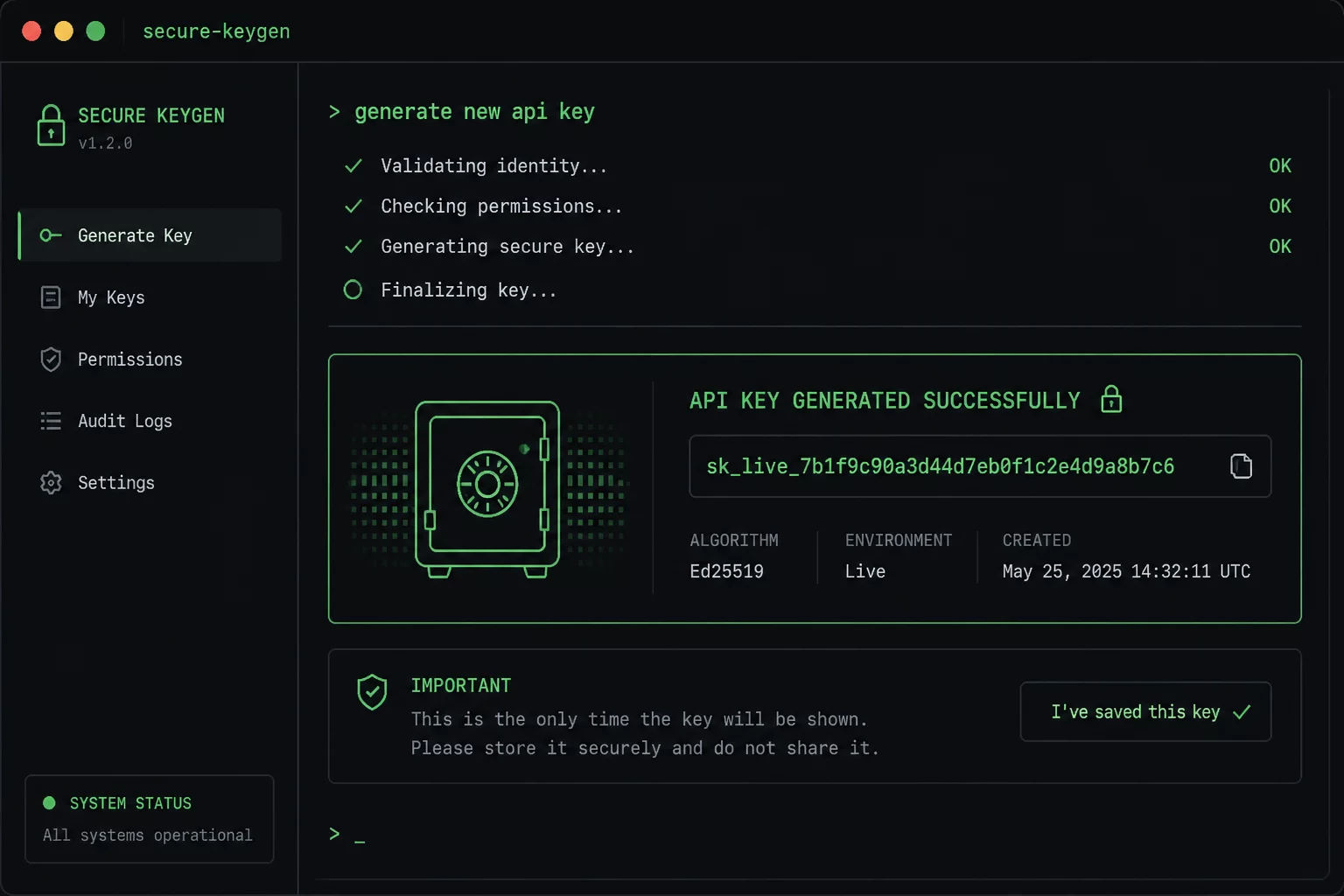
An API Key Management schema provides the structural foundation for issuing, validating, restricting, and tracking credentials used by client applications. This design pattern ensures that authentication is fast, secure, and easily auditable without putting unnecessary load on the primary user account database.
Core Structural Requirements
To implement an effective API key schema, database administrators must separate active credentials from historical logs. Storing key hashes rather than raw values protects sensitive access tokens from leakage. This pattern divides data into three distinct operational domains:
- Credential Metadata: Storing key identifiers, ownership tags, and current lifecycle status (active, suspended, rotated).
- Scope Restrictions: Associating keys with specific endpoints or read/write permissions to limit the blast radius of a credential compromise.
- Usage & Rate Limits: Defining maximum requests per window and linking usage counters to prevent service exhaustion.
Schema Relations and Validation Flow
In a standard database layout, the main key table connects directly to the account or tenant entity. Foreign keys establish ownership, ensuring that a deleted tenant automatically cascades and invalidates associated credentials. When an external client makes a request, the API gateway performs a quick lookup using a SHA-256 hash of the incoming key. The database verifies the expiration date and checks the scope mapping table to confirm that the requested resource matches the allowed operations.
Best Practices for Key Rotation
Modern applications require zero-downtime key rotation. This is accomplished by allowing a tenant to hold two active keys simultaneously during transition periods. The schema supports this by enforcing a one-to-many relationship between the account and its API keys, storing precise timestamps for activation, soft expiration, and hard deletion.