Understanding the Intent of RBAC Structures
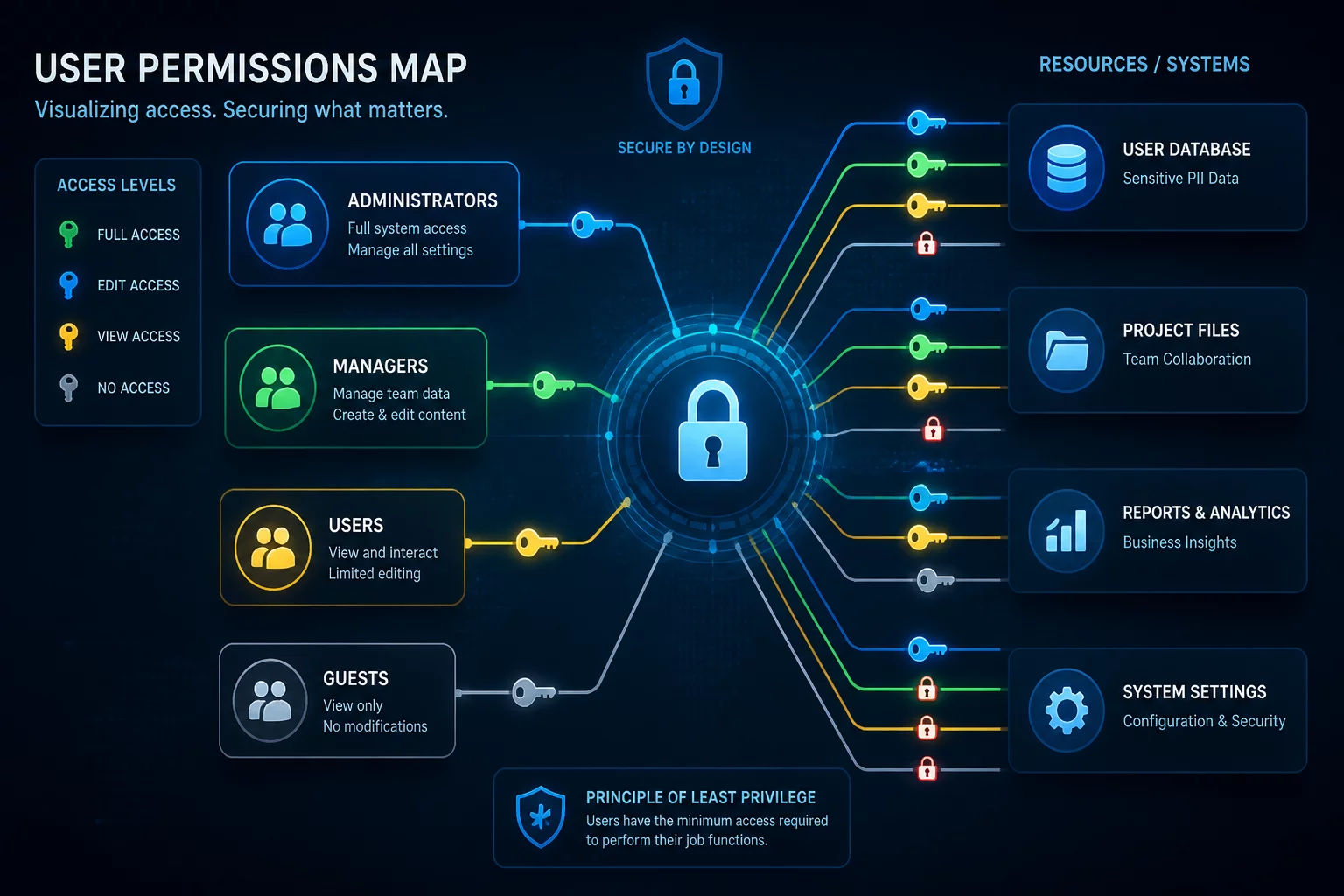
A Role Based Access Schema functions as the gatekeeper of application logic. Instead of assigning specific permissions directly to a user—which creates a maintenance nightmare as the organization grows—this pattern introduces an intermediary layer: the Role. The intent is to create a flexible framework where administrative changes to a job function automatically propagate to every individual assigned to that function. This structural decoupling ensures that security policies remain consistent across the entire platform.
Core Entities and Their Interplay
In a standard implementation, the schema revolves around three primary entities and two mapping tables. The Users table stores identity, while the Roles table defines specific job functions like "Editor," "Administrator," or "Guest." The Permissions table contains the granular actions allowed in the system, such as CREATE_POST or DELETE_USER. By using join tables for User-Roles and Role-Permissions, the system supports a many-to-many relationship, allowing one user to hold multiple roles simultaneously.
Hierarchical and Dynamic Access
Advanced versions of this schema often include self-referential keys in the Roles table to support inheritance. A "Senior Manager" role might inherit all permissions from the "Junior Manager" role. This hierarchy minimizes data redundancy and makes the intention of the access levels clear to anyone querying the database. When a user logs in, the system resolves their effective permissions by aggregating the capabilities of all their assigned roles, providing a robust security context for the application session.
Performance Considerations
While RBAC offers immense flexibility, it requires efficient indexing on join tables to avoid performance bottlenecks during authorization checks. Caching resolved permission sets in a session store is a common strategy to prevent repeated, expensive joins on every request. This ensures that security does not come at the cost of user experience speed.