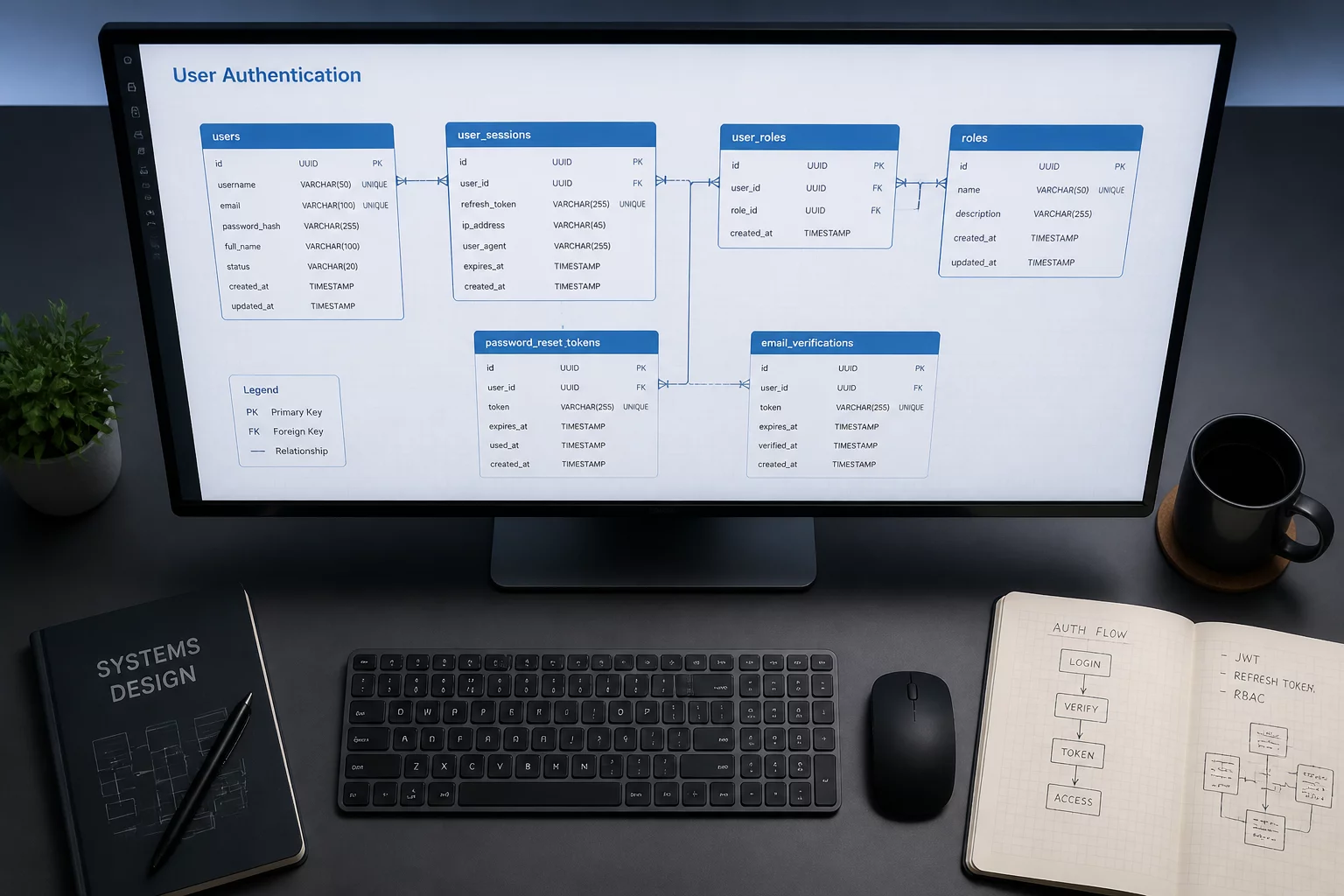
The User Authentication Schema serves as the foundational gatekeeper for digital systems. It dictates how identities are represented, verified, and maintained across a platform. The primary intent is to provide a secure harbor for user credentials while enabling efficient lookup and session validation. In a modern context, this schema must go beyond a simple username and password table, accounting for multi-factor authentication, account locking mechanisms, and audit trails for compliance.
Core Structural Objectives
When you build this schema, the main goal is to isolate sensitive data. Instead of placing everything in a single user profile table, it is wise to separate credentials into a dedicated entity. This minimizes the risk of exposing password hashes during standard profile queries. They should only be fetched during the login process. Additionally, the schema needs to handle account metadata like registration dates, last login timestamps, and account statuses such as 'active', 'suspended', or 'pending verification'.
Entities and Their Intent
- Users Table: Stores stable identifiers and public profile markers.
- Credentials Table: Holds salted hashes and cryptographic secrets, strictly isolated from public views.
- Sessions Table: Manages stateful or stateless token references, expiration logic, and device identification.
- Audit Log: Records authentication events to identify patterns of unauthorized access attempts.
By defining these relationships clearly, developers ensure that the system can scale as the user base grows, allowing for easier database partitioning and improved performance during high-traffic peaks. Take care to index unique fields like emails and usernames to keep lookup operations near-instantaneous.