Structural Patterns
Content Management Schema
Designing robust data structures for versioning, taxonomies, and multi-format digital publishing.
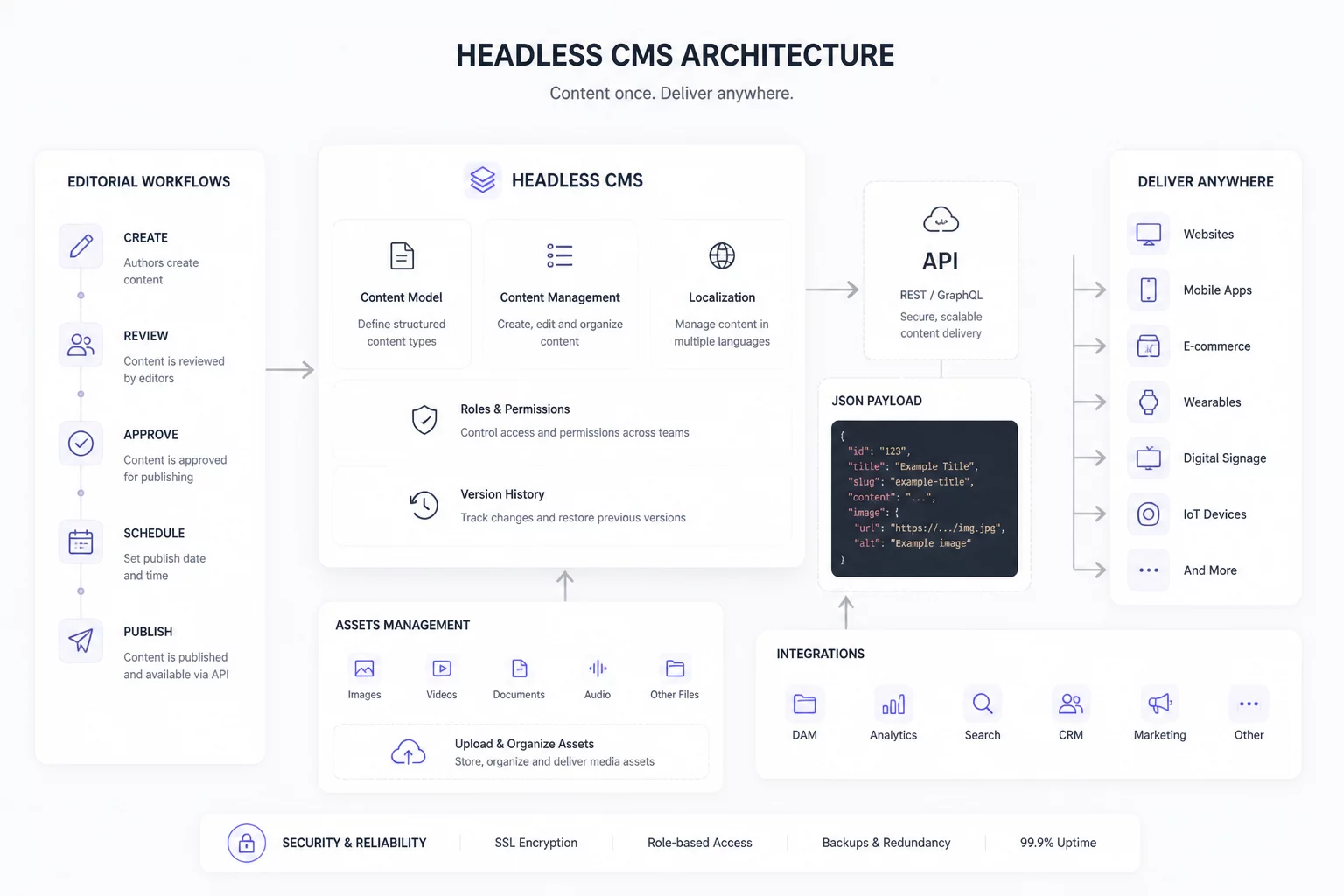
A Content Management Schema is the specialized database architecture designed to manage the full lifecycle of digital content, providing the structural logic for how articles, media, and assets are authored, stored, and distributed. Unlike static data stores, a CMS schema is built to handle the temporal and relational complexities of modern publishing, such as maintaining multiple versions of a single document and linking it across global taxonomies.
Structural Specification
| Schema Identifier | CMS-2026-ARCH-V1 |
| Data Ownership | Role-Based Editorial Access |
| Consistency Level | Strong (ACID) for Workflow States |
| Normalization | 3.5NF Hybrid Structure |
Recommended Implementations
Large corporations use these schemas to unify their communication across internal wikis, public PR portals, and investor relations pages, ensuring consistent branding and message control.
Headless CMS architectures use this schema to deliver content as structured JSON payloads to various consumers, including mobile apps, wearable devices, and smart TV interfaces.