Understanding the Intent of a Product Catalog Schema
A resilient product catalog schema serves as the foundation of any e-commerce database. It needs to handle diverse product attributes, dynamic categorization, and rapid search queries without degrading application performance. Designing this schema involves balancing normalization for data integrity against denormalization for faster read speeds, especially during high-traffic shopping events.
Core Structural Components
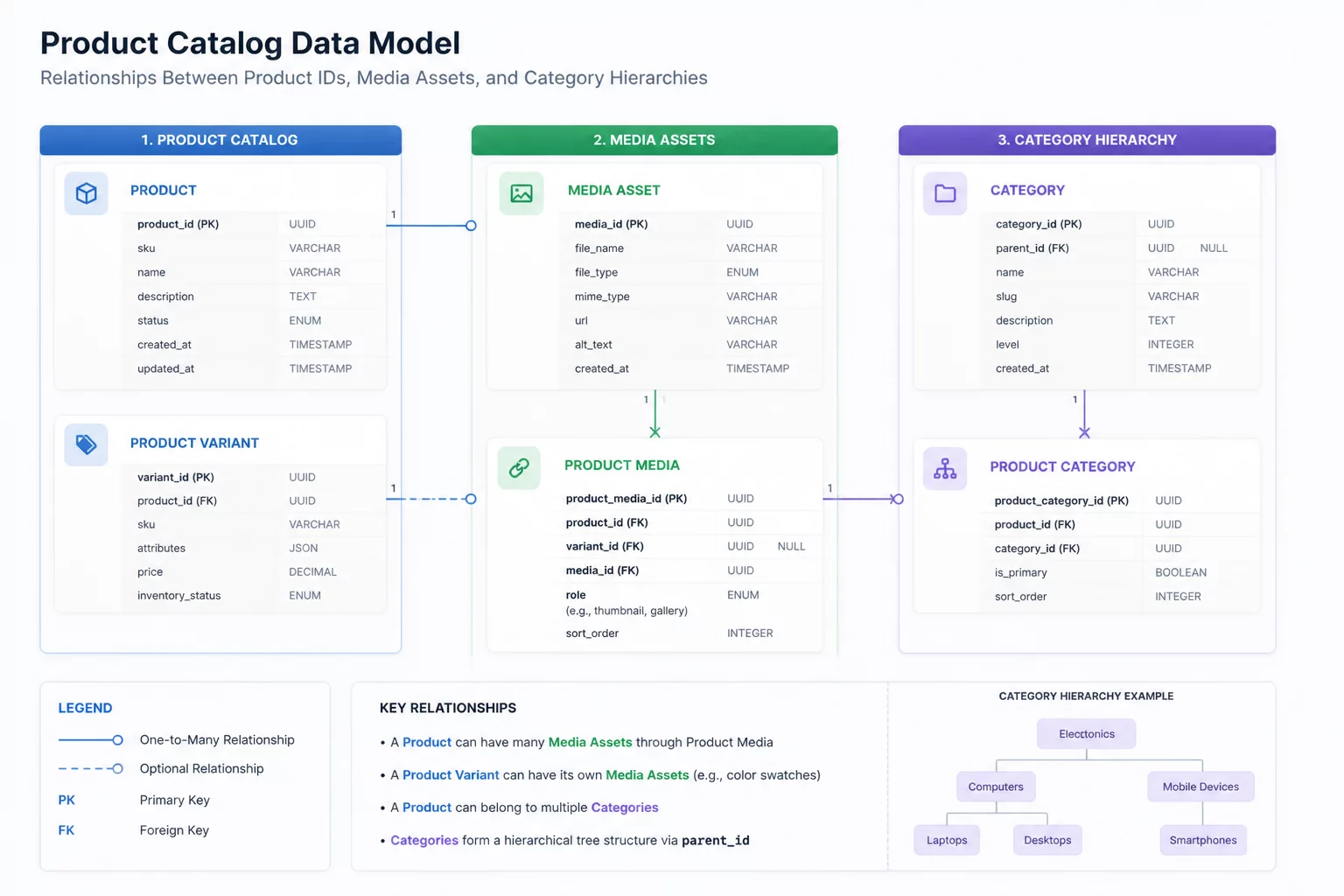
Modern catalog databases typically separate core product data from mutable attributes and categories. We structure the schema into distinct tables for products, variants, categories, and dynamic attributes. This separation prevents the database from locking up during frequent inventory updates. Using an Entity-Attribute-Value (EAV) model or JSONB fields inside PostgreSQL allows teams to support hundreds of custom properties without constantly altering the physical table structure.
Handling Categorization and Hierarchies
Categories rarely exist in isolation; they form complex hierarchies. Implementing parent-child relationships with nested sets or adjacency lists ensures that customers can navigate from broad departments down to specific product lines. Using recursion inside the application layer or recursive CTEs in your SQL queries simplifies category tree traversal and keeps load times under ten milliseconds.
Performance and Scale Strategies
Read operations dominate catalog databases. We recommend deploying read replicas to handle search queries, leaving the primary database instance dedicated to write operations like updating stock counts or adding new products. Proper index selection on fields like category_id, sku, and status prevents table scans and preserves low latency even as your product library grows to millions of SKUs.