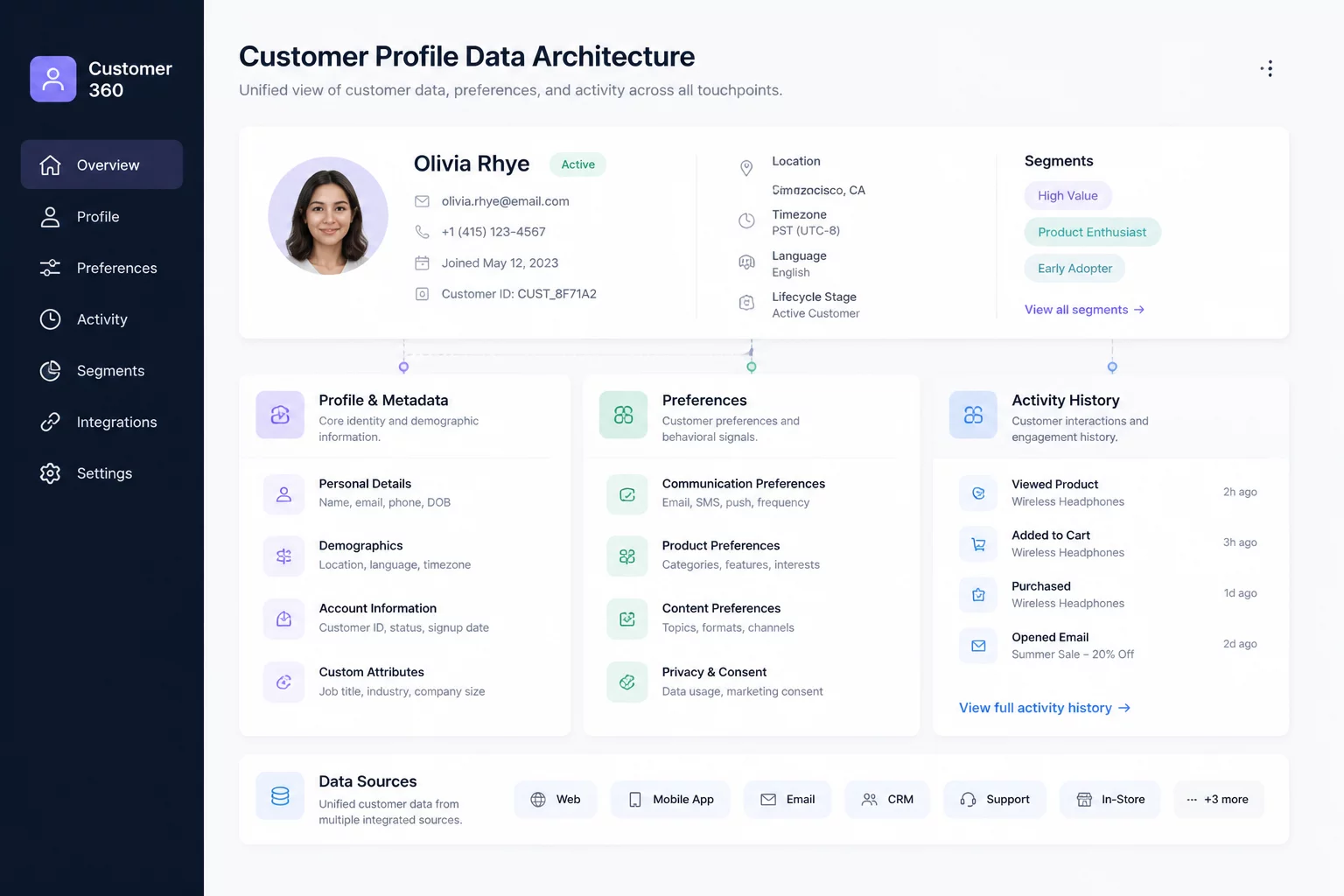
The Customer Profile Schema is the primary structural blueprint for managing user-centric data within an application. Its main intent is to centralize personal identity information, contact details, and account preferences into a coherent model that other domain services can safely reference. By establishing a dedicated profile structure, developers ensure that sensitive user attributes are isolated from transactional logic, facilitating better data governance and privacy compliance.
Core Objectives of Profile Design
In most modern systems, the profile schema serves as the single source of truth for who a user is. It goes beyond simple names and emails; it often includes localization settings, subscription statuses, and verification flags. A well-designed schema avoids the common pitfall of mixing authentication credentials with profile data, keeping the two concerns separate for enhanced security and maintenance.
Data Integrity and Normalization
To maintain high data quality, the schema typically follows third normal form (3NF) to prevent redundancy. For instance, addresses might be stored in a separate table linked by a foreign key, allowing for multiple locations per user without duplicating core profile attributes. This approach ensures that a single update to a user's primary name propagates through the system without leaving stale records in secondary tables.
Extensibility for Future Growth
As applications evolve, new profile requirements often emerge, such as social media handles or loyalty program tiers. A flexible schema might utilize a hybrid approach, combining structured SQL columns for mandatory data with a JSONB column for dynamic attributes. This allows teams to iterate on user features without performing heavy migrations on the core table structure.