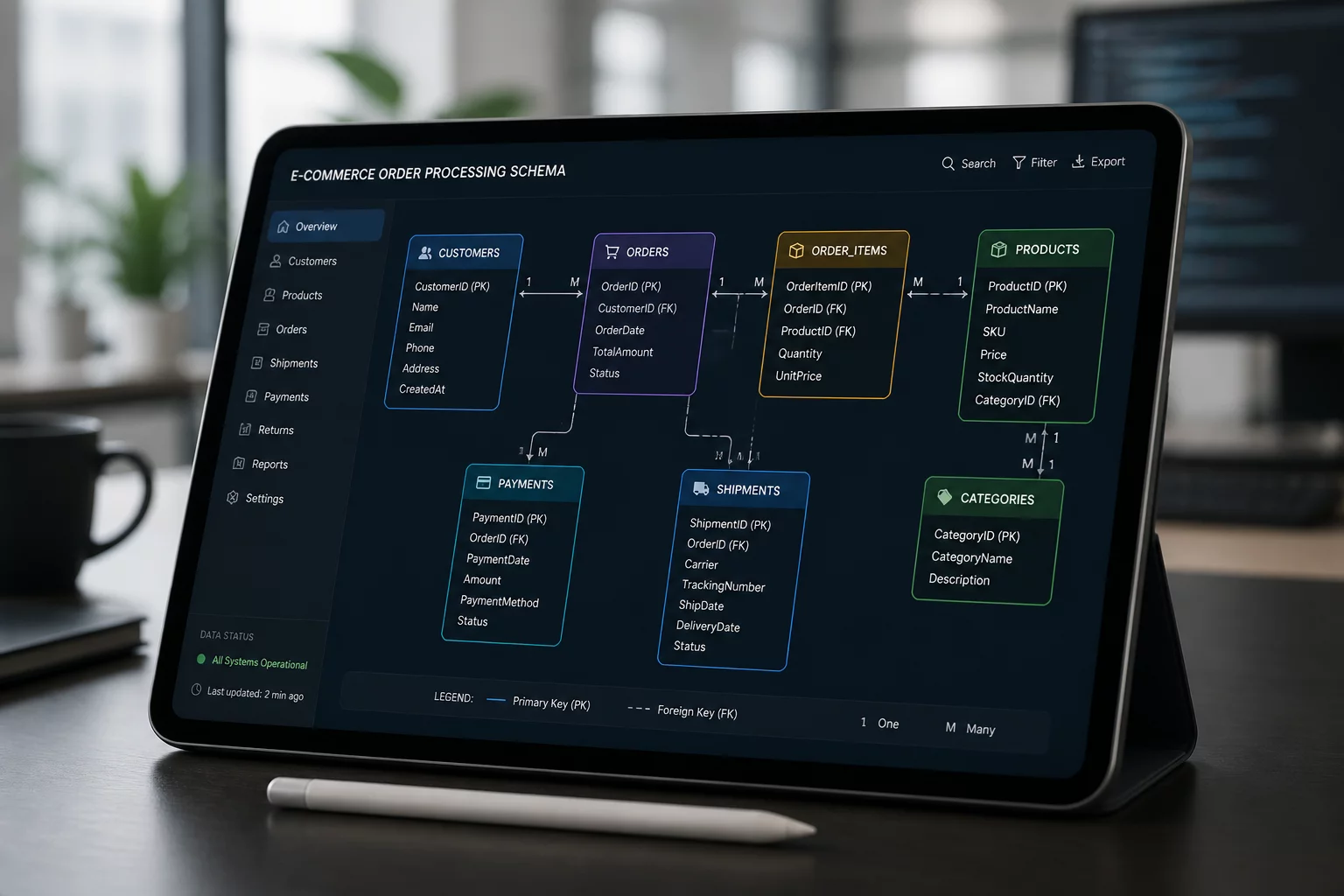
An Order Processing Schema serves as the structural heartbeat of any fulfillment system. At its core, it manages the complex lifecycle of a customer purchase, transforming a collection of intent—represented by items in a cart—into a verified financial transaction and physical or digital delivery. A well-designed schema doesn't just record data; it enforces business rules at the database level, ensuring that an order cannot be marked as "shipped" before it is marked as "paid" and that inventory remains synchronized throughout the process.
The Core Intent: Capturing Transactional Truth
The primary goal of this schema is to provide a single, immutable source of truth for every transaction. This involves more than just a table of quantities and prices. It requires a robust relational structure where order headers contain global metadata—such as customer identifiers, total values, and timestamps—while order lines handle the granular details of individual products. This separation allows for complex operations like partial shipments, localized tax applications, and item-specific discounts without corrupting the overall integrity of the parent record.
In practice, architects often struggle with the balance between normalization and performance. While a fully normalized schema prevents data duplication, high-volume systems might introduce strategic denormalization to speed up dashboard reporting and order history lookups. The intent remains the same: ensuring that once an order is placed, its state is trackable and its history is auditable for both the customer and the business.
State Machines and Lifecycle Management
Order processing is inherently state-driven. A typical lifecycle moves through several specific phases: Pending, Validated, Paid, Processing, Shipped, and finally Delivered or Returned. Within the schema, this is often handled through a dedicated Status table or a constrained string field. It is critical to implement triggers or application-level guards that prevent illegal transitions, such as moving an order from "Cancelled" directly to "Shipped."
- Atomic Transitions: Every change in status should be an atomic operation, often accompanied by an entry in an Audit Log table to track who made the change and when.
- Concurrency Control: Using optimistic locking ensures that two different warehouse operators don't attempt to update the same order record simultaneously.
- Event Triggers: Status changes frequently fire events to external systems, such as sending confirmation emails or notifying third-party logistics providers.
Integration with Inventory and Finance
The Order Processing Schema cannot exist in isolation. It must interface tightly with the Inventory Management Schema to reserve stock at the moment of order creation. This "soft-lock" prevents overselling. Similarly, it connects to the Payment Gateway Schema to store transaction tokens—never raw credit card data—to verify fulfillment eligibility. By maintaining these clear relational boundaries, the system remains modular, allowing the payment provider to change without requiring a total overhaul of the ordering logic.