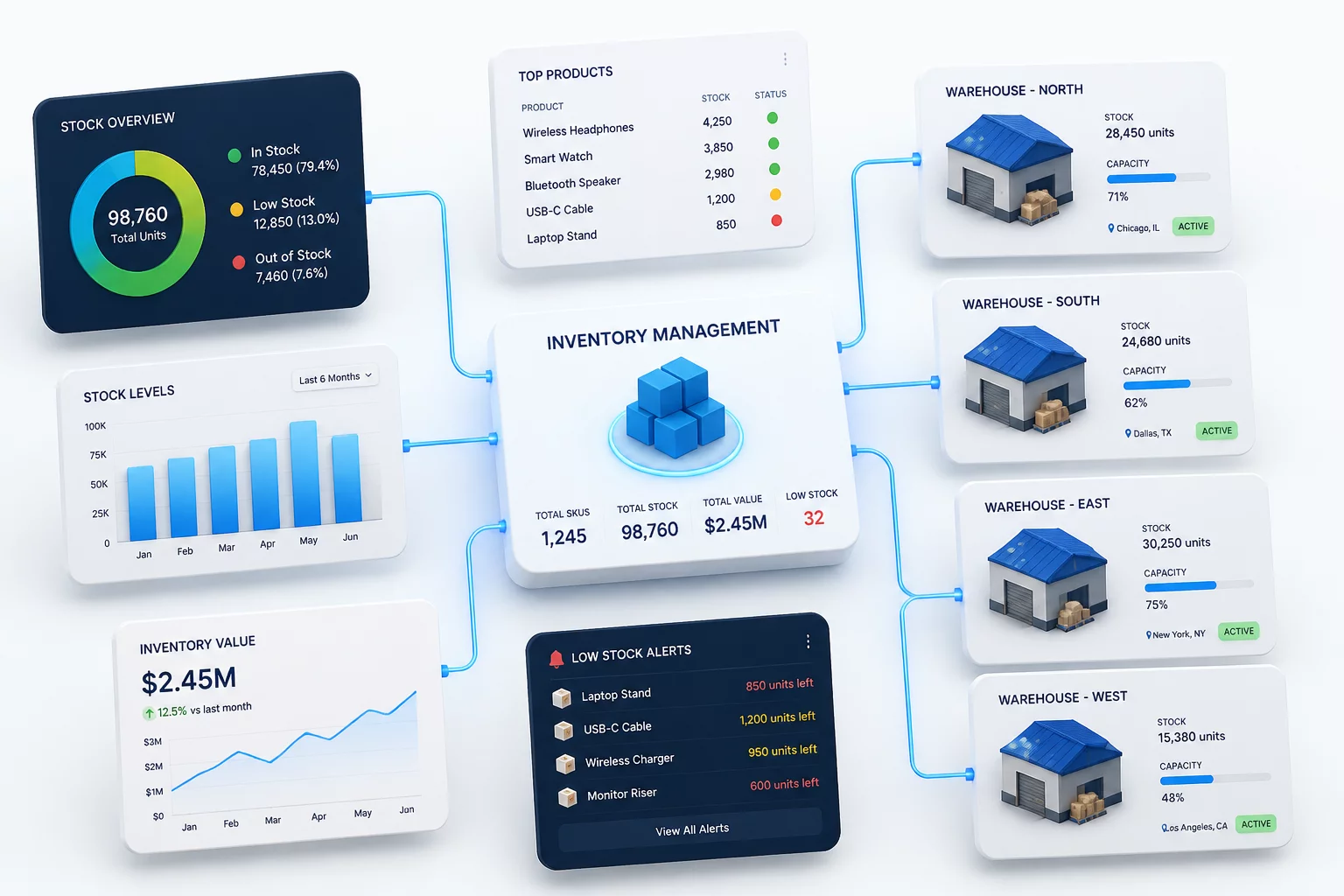
An inventory management schema defines how a database structures physical stock, product availability, warehouse locations, and stock movements. At its core, this schema prevents overselling and stock discrepancies by maintaining a balance between current stock levels, pending reservations, and historical transaction logs. In high-throughput systems, design choices directly impact checkout performance and warehouse operations.
Core Entity Relationship Strategy
Designing for inventory requires separating static catalog information from dynamic stock balances. While products and variants remain relatively constant, stock quantities fluctuate constantly. The schema divides these concerns into distinct tables: warehouses, stock levels, and inventory transactions. A dedicated inventory transaction log tracks every addition, deduction, reservation, and adjustment. This audit trail is critical for financial reporting, error detection, and synchronization with third-party supply chain software.
Solving Concurrency and Race Conditions
High-volume sales events trigger concurrent write operations on the same database rows, often leading to race conditions. To avoid overselling, developers apply either pessimistic locking or optimistic locking. Pessimistic locking blocks rows during checks, securing the inventory but potentially slowing down concurrent requests. Alternatively, optimistic locking uses version numbers or conditional updates, failing the transaction if another process modified the stock level in the meantime. Many modern architectures also utilize inventory reservation tables, holding stock temporarily during checkout without immediately modifying the main stock count.
Key Tables and Structural Rules
A robust schema typically features three core components:
- Warehouses: Defines physical storage locations, distribution centers, or retail outlets with distinct geolocations.
- Inventory Stocks: Maps product variants to specific warehouses, storing available, reserved, and safety stock levels.
- Stock Movements: An immutable ledger recording the timestamp, movement type (receive, ship, adjust, return), quantity, and associated order ID.
By enforcing foreign key relationships and unique constraints on product-warehouse pairs, the system guarantees data integrity and simplifies regional distribution queries.