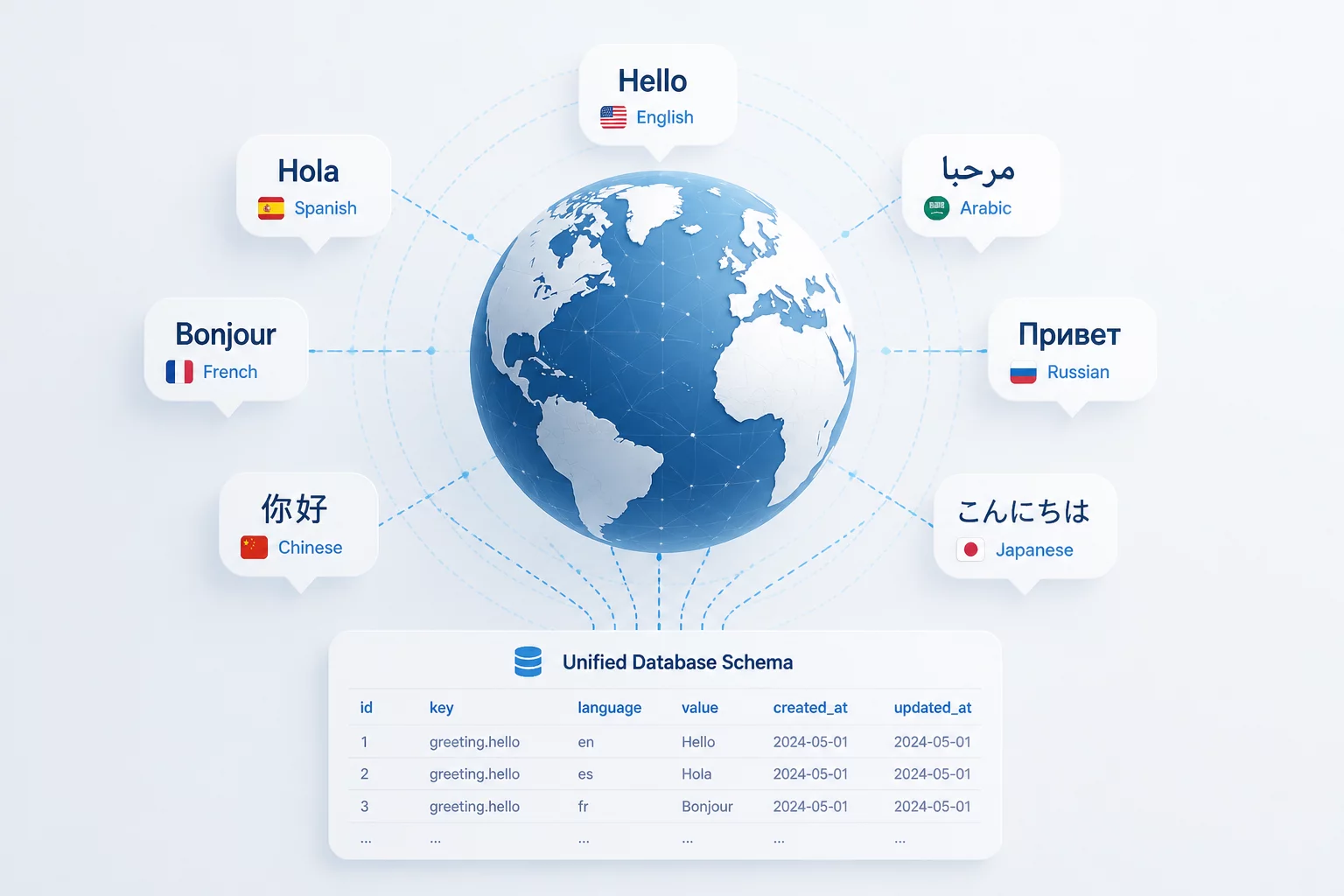
To build software that reaches a global audience, you need a database structure capable of serving content in multiple languages without duplicating database tables. The Localization String Schema pattern solves this by isolating translatable text from core application entities. This structural design separates dynamic interface labels, descriptions, and product details into a dedicated translation repository, mapping language keys to specific locales.
Why Decoupling Translations Matters
Embedding hardcoded strings or storing multiple language columns directly inside a table (such as name_en, name_fr, name_es) creates a rigid database that becomes difficult to maintain. As you add more languages, you must continuously alter your database schema, run migrations, and update all affected queries. This approach is fragile and does not scale.
By moving translation data to a normalized, dedicated schema, you keep your core tables clean. Your product catalog or blog tables store only non-translatable data like IDs, prices, dates, and relationships, while reference keys point to the localization table. This structure allows you to add support for new languages instantly without altering a single table structure.
Core Components of the Localization Schema
A reliable translation setup relies on a few key tables that work together to resolve language requests:
- Locales Table: Stores active language codes along with regional tags (such as en-US, fr-CA, de-DE) and status flags.
- Translation Keys Table: Holds the unique identifiers used in your codebase to request specific text blocks (for example, dashboard.welcome_message).
- Translation Values Table: Pairs the translation key with a specific locale and stores the actual translated text content.
Handling Locale Fallback Logic
A common challenge in global applications is handling missing translations. If a user requests content in French Canadian (fr-CA) but a specific product description has only been translated into standard French (fr) or English (en), your database query or application layer must resolve this fallback smoothly. The localization schema supports hierarchical fallback chains, ensuring that your application always displays the closest possible language match instead of returning empty fields.