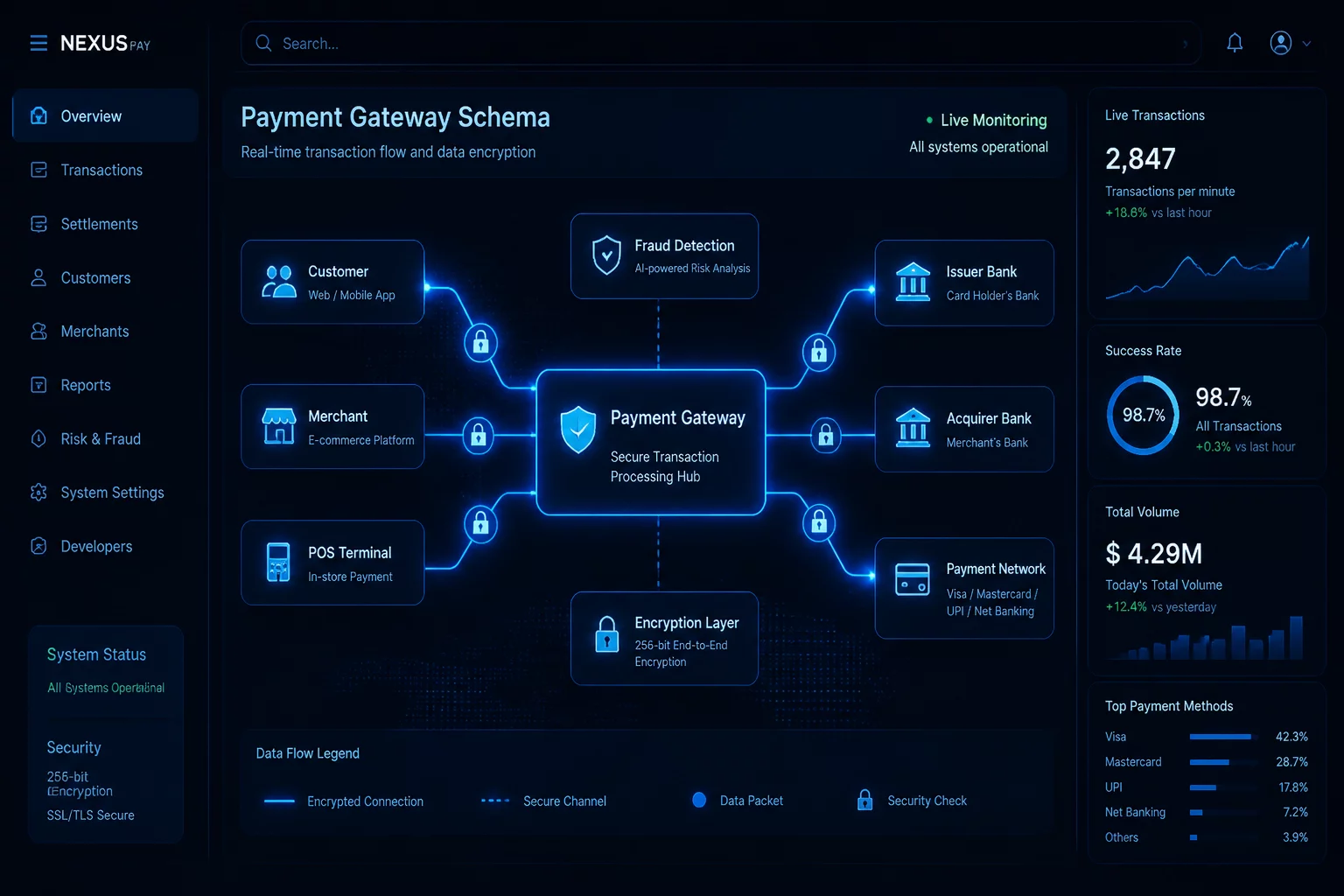
The Payment Gateway Schema represents the technical backbone of modern digital commerce, focusing on the secure and verifiable exchange of financial data. At its core, the schema's intent is to create a deterministic path for every transaction, ensuring that no cent is lost between the customer's wallet and the merchant's account. Unlike generic data structures, this pattern prioritizes auditability and idempotency, allowing the system to recover from network failures without duplicating charges or losing track of funds.
Architectural Intent and Data Integrity
A well-designed gateway schema separates the sensitive payment method details from the transactional ledger. By utilizing a tokenized approach, the core database never stores raw credit card information, instead relying on unique identifiers linked to secure external vaults. This structure simplifies compliance and minimizes the blast radius of potential security breaches. The relationship between the Transactions table and the Audit Logs is strictly one-to-many, ensuring that every transition—from authorization to settlement—is captured as a permanent, non-volatile record.
Managing Complex Transactional States
Financial operations move through a precise lifecycle of states: initiated, pending, authorized, captured, or failed. The schema must support these transitions through robust state machines within the database layer. We recommend using enumerated types or strict lookup tables to enforce valid state changes, preventing a transaction from moving directly from pending to refunded without an intermediate captured status.
Core Entities of the Schema
- Transactions Ledger: The immutable source of truth for all movement of funds.
- Merchant Identifiers: Links every transaction to a verified and audited business entity.
- Processing Logs: Detailed technical telemetry for debugging failed API calls to external processors.
- Dispute Management: A separate relational layer to handle chargebacks and reversals without altering the original transaction history.
Implementing this schema requires a deep understanding of database locks and isolation levels. Engineers often choose Serializable or Repeatable Read isolation to ensure that concurrent updates to a merchant's balance do not result in race conditions. In this handbook, we treat the Payment Gateway Schema as a mission-critical component that demands the highest level of structural discipline and consistency.