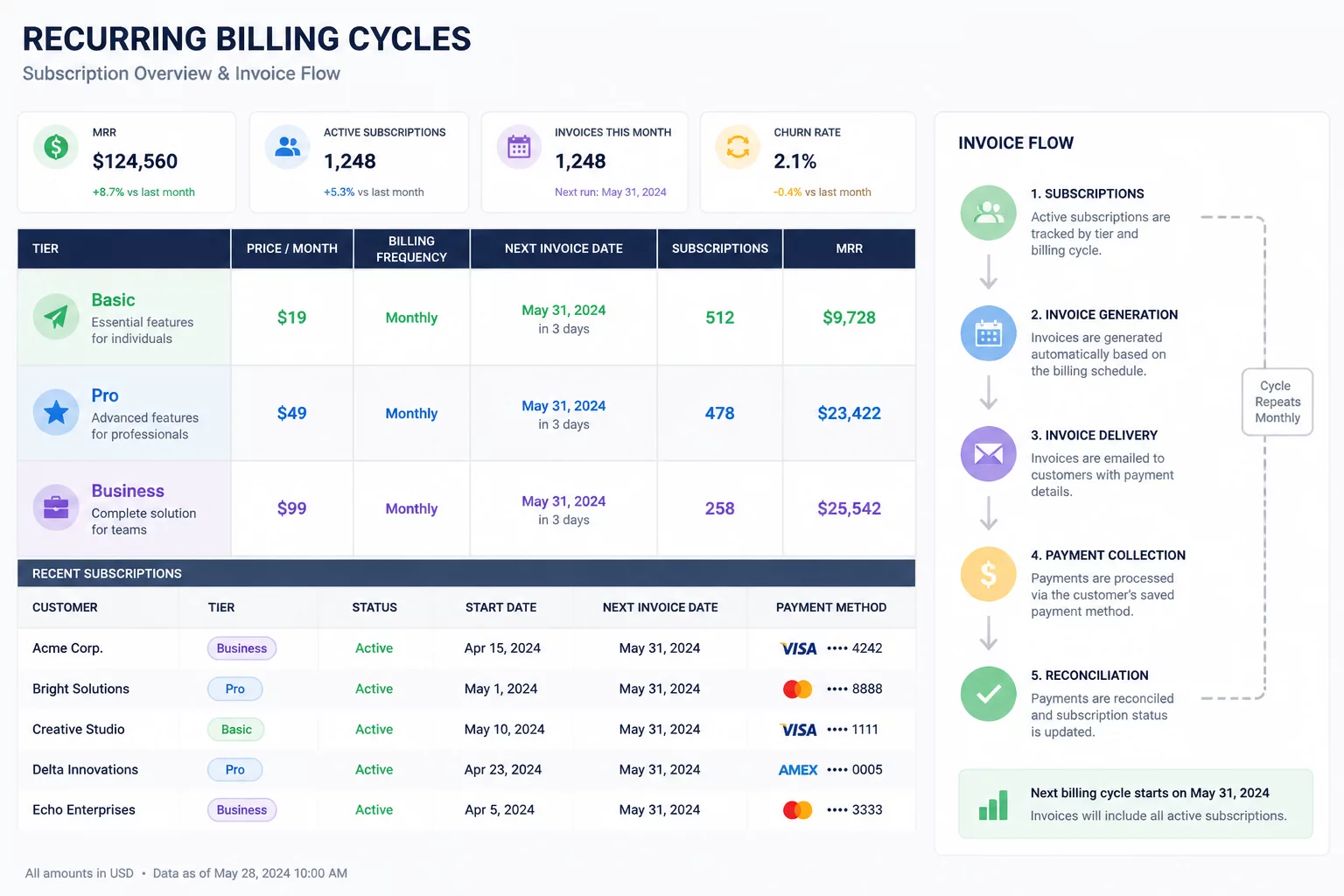
Managing recurring revenue requires a database layout that handles complex billing states, changing cycles, and automated payment retries without losing transactional accuracy. The subscription billing schema provides the exact foundation for tracking client plans, invoicing periods, and transaction logs in modern software-as-a-service platforms.
Core Structure and Key Entities
At the center of this database design lies the subscription table. It acts as the connector between the subscriber profile, the pricing plan, and the billing schedule. By isolating the pricing rules from the actual customer subscription record, developers prevent historical invoices from changing when price adjustments occur in the future.
A robust system typically splits this architecture into four main parts: the plan table containing product tiers, the subscription table managing active periods, the invoice table for historical billing records, and the transaction ledger for keeping payment gateway records. This separation makes auditing simple and keeps the tables clean.
Handling Billing Cycles and Status States
Subscriptions move through various states such as active, trialing, past due, or canceled. Managing these transitions requires a strict state machine pattern within the application layer. The database stores these state flags, along with timestamp indicators for the current period start and end times.
Billing cycles can occur monthly, quarterly, or annually. To prevent database lockups during massive concurrent updates, engineers schedule cron jobs to process renewals in batches throughout the day. This distributes database load and avoids processing spikes.
Schema Optimization Tips for pgAdmin Users
When analyzing this database schema in pgAdmin, creating indexes on the foreign key columns (specifically customer ID and plan ID) speeds up query performance significantly. The query tool helps visualize execution plans to identify table scans. Adding a partial index on subscriptions with a status of 'past_due' allows the billing worker to target accounts needing retry payments instantly.