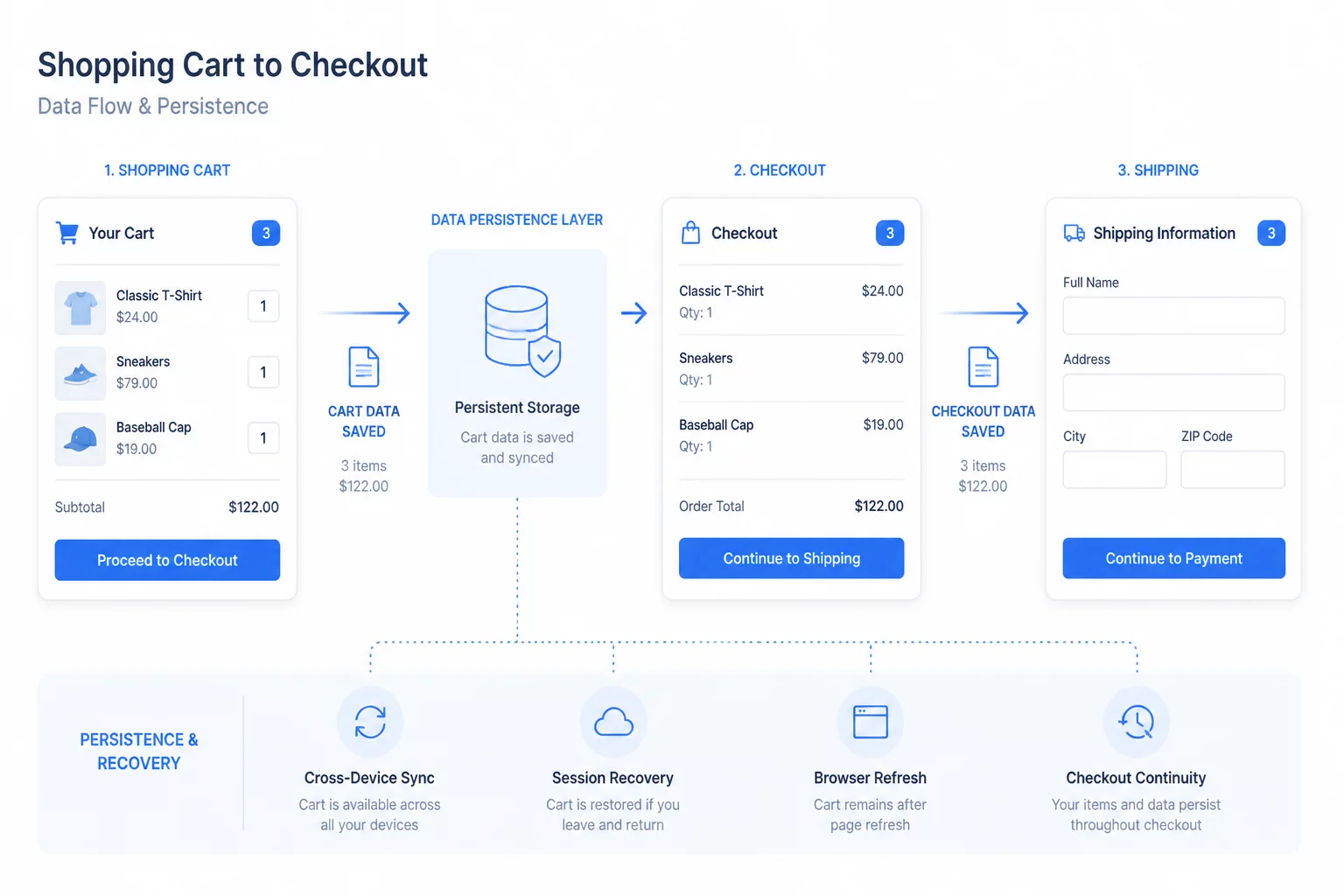
A shopping cart schema is the structural blueprint for managing items a customer intends to purchase before they commit to a final transaction. It acts as a bridge between the static product catalog and the dynamic order processing system. The fundamental intent of this schema is to maintain state across user sessions while allowing for high-frequency updates as users add, remove, or modify item quantities.
The Intent of Persistence
In modern e-commerce, the shopping cart is rarely just a temporary list. It often serves as a "wishlist light," where customers store items for future consideration. Engineering this schema requires balancing the need for speed (transient state) with the need for persistence (saved carts for logged-in users). High-availability systems often use a hybrid approach where active cart data is cached in-memory while being asynchronously mirrored to a relational database for long-term recovery.
Core Entity Relationships
A robust cart schema typically consists of two primary tables: the cart header and the cart line items. The header table connects a unique identifier—such as a session ID or a user GUID—to metadata like the creation date and the preferred currency. The items table then maps these header IDs to specific product SKUs, storing current quantities and any selected variant attributes like color or size. Crucially, the schema must include a mechanism for price snapshotting to ensure that price changes in the main catalog do not cause errors during the checkout process.
Handling Expiration and Cleanup
One often-overlooked aspect of cart schema design is the cleanup logic. Abandoned carts can lead to significant database bloat if left unmanaged. Architects must decide whether to use soft-deletes or hard-deletes triggered by a "last activity" timestamp. It is common practice to retain cart data for 30 days to support marketing re-engagement efforts before moving it to cold storage or purging it to maintain index performance.