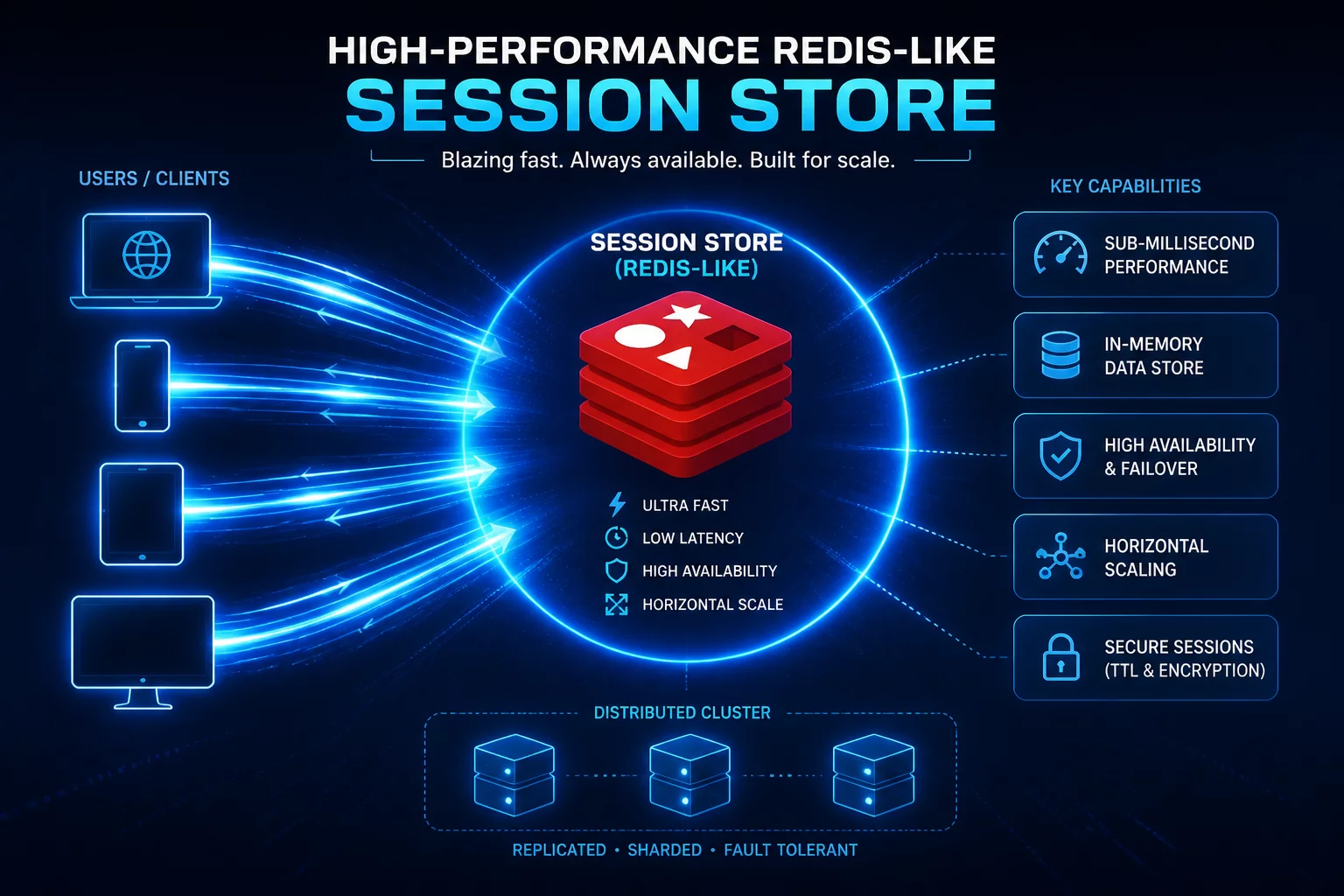
A Session Management Schema is the architectural blueprint designed to track, store, and validate active user states across distributed applications. By establishing a dedicated structure for session identifiers, token lifetimes, and client metadata, this schema ensures secure user experiences while preventing unauthorized access and session hijacking attempts.
Core Architectural Components
Modern applications require robust session handling to balance security and responsiveness. A typical database schema for session tracking contains tables for active sessions, refresh tokens, and authentication contexts. These structures store session hashes, user references, IP addresses, user agent strings, creation timestamps, and strict expiration bounds.
To reduce query latency, high-frequency fields like session validity are often cached, while the persistent database remains the ultimate source of truth for revocation checks. This hybrid approach allows developers to terminate compromised sessions instantly by updating a single status column in the database.
Database Schema Structure
The sessions table uses a unique, cryptographically secure identifier as its primary key. The schema explicitly maps the relationship between users and their active devices. An additional audit trail records when sessions transition from active to idle or revoked, providing valuable telemetry for security response teams.
Specialized fields handle token rotation strategies, storing parent token signatures to detect replay attacks. If a threat actor attempts to reuse a revoked refresh token, the schema logic detects the anomaly through the token hierarchy and invalidates all related sessions immediately.
Performance Tuning and Indexing
Because session validation happens on nearly every network request, database performance is paramount. Creating composite indexes on the user ID and active status columns dramatically speeds up validation checks. Furthermore, databases benefit from regular maintenance routines that purge expired session records to keep table sizes manageable and queries fast.